



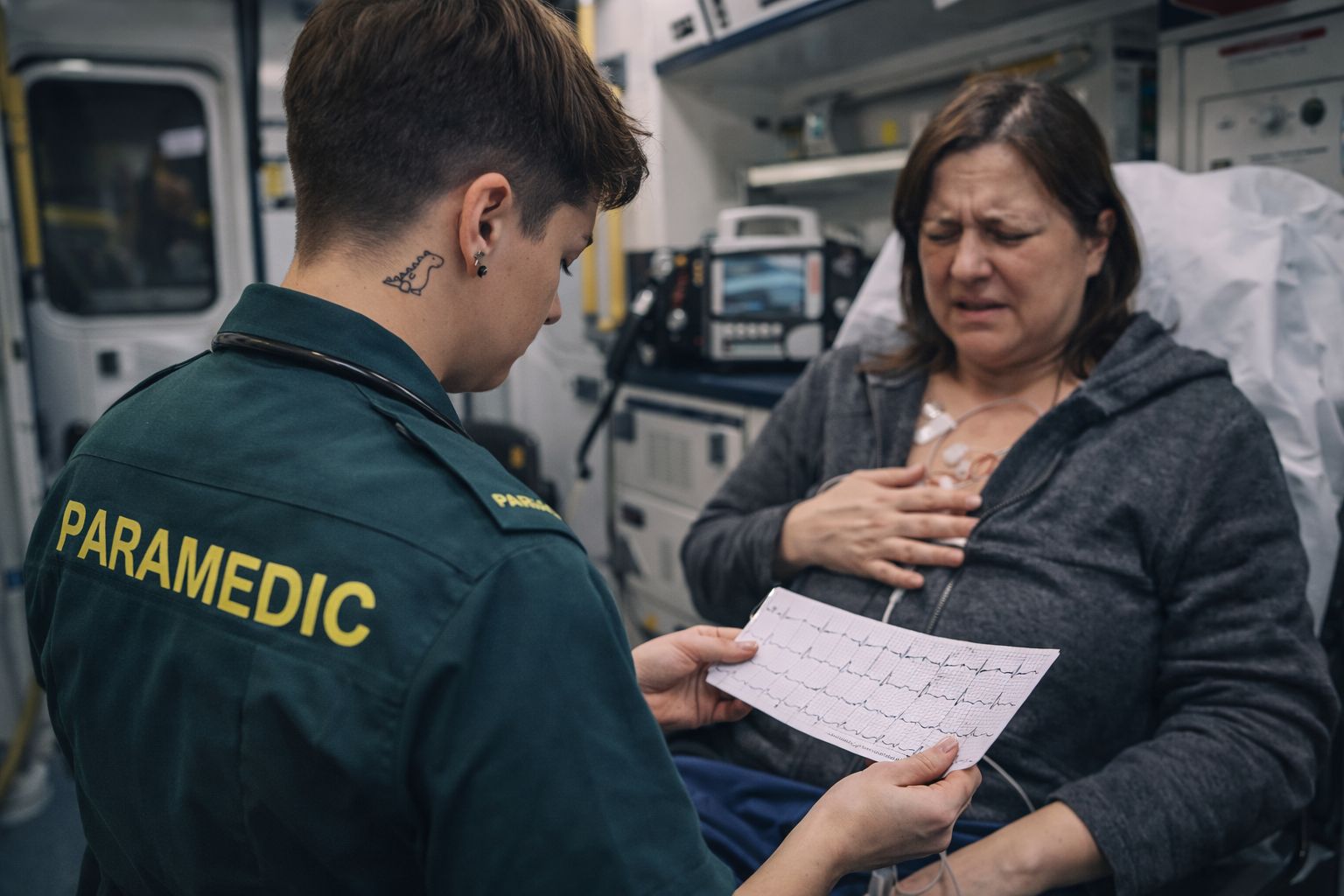
Brazilian paramedic Priscila Currie, who has been working in London for more than 15 years, warns that heart attack symptoms in women may present differently from the classic male pattern and are often mistaken for digestive problems such as gastritis.
The first aid specialist recalls the case of a patient who had been taking antacids for two days.
“The woman was feeling pain in the upper abdomen, persistent discomfort and a burning sensation that wasn’t improving. She thought it was gastritis and only called an ambulance when she began to experience extreme fatigue and shortness of breath. I personally performed the electrocardiogram. It was then, analysing the trace in front of me, that I identified changes consistent with an acute myocardial infarction already in progress. She had been having a heart attack for two days,” the paramedic reports.
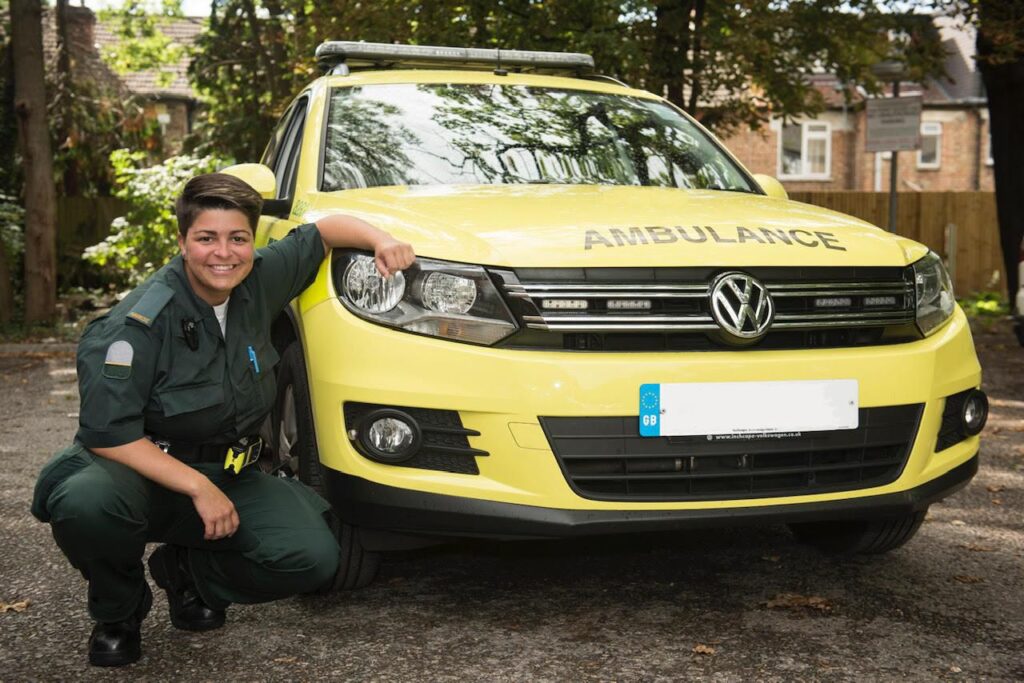
Priscila stresses that situations like this highlight the importance of recognising the symptoms of heart attacks in women. “That case brought into reality something I had already studied at university and in textbooks: heart attacks in women can present differently. It was very striking to see, in practice and right in front of me, something that until then had been purely theoretical.”
According to the World Health Organization, cardiovascular diseases are the leading cause of death among women worldwide, accounting for around one third of all female deaths globally. In the United States, data from the Centers for Disease Control and Prevention also show that heart disease remains the leading cause of death among women.
Unlike the classic male model of a heart attack — severe chest pain, crushing pressure and pain radiating to the left arm — women may experience symptoms such as epigastric pain, persistent indigestion, nausea, pain in the back, neck or jaw, shortness of breath, extreme fatigue and generalised malaise.
“Often these symptoms are not taken seriously, which contributes to delays in seeking medical help. And in cardiology, time is heart muscle,” Priscila warns.
If a heart attack is suspected, the recommendation is to call the emergency services immediately, keep the person at rest and, if there is no allergy or contraindication, administer 300 mg of aspirin for the person to chew.
“Aspirin does not stop a heart attack, but it can reduce clot formation and buy time until definitive hospital treatment is provided,” the paramedic explains.
In the case described, the patient was taken directly to the catheterisation laboratory of a hospital in London, where three stents were implanted to unblock the arteries. Today she is doing well, but developed heart failure as a consequence of the delay in treatment.
“The story had a positive outcome because care was eventually provided in time. But it could have been different. Recognising that heart attacks in women may not follow the classic pattern is essential. Information saves lives,” Priscila concludes.
Priscila Currie has been a qualified paramedic since 2014, graduating from St George’s University of London. On social media she is known as @priscila_paramedica_londres, where she regularly shares cases and information about emergencies that could often be prevented through awareness and prevention.